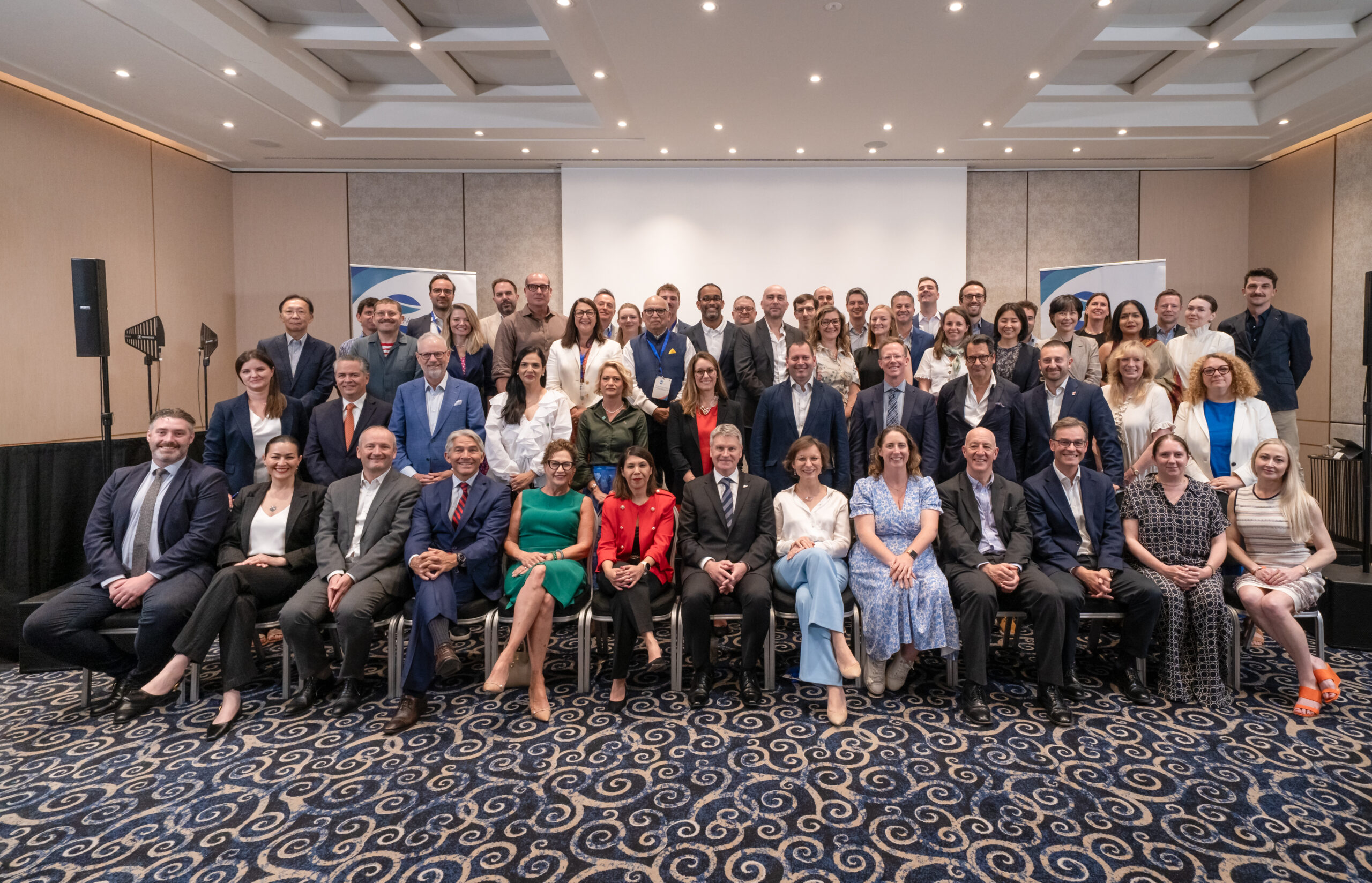
As part of our Measured Conversations series, our CEO, Helen Medina, recently sat down with Ana Cristina Villalpando Fonseca, Director General of the Chamber of the Tequila Industry (CNIT), for a conversation marking a special milestone.

In the spirit of Cinco de Mayo, and as we celebrate the cultural richness of tequila around the world, this year also marks the 20th anniversary of UNESCO’s recognition of the Agave Landscape and Ancient Industrial Facilities of Tequila as a World Heritage Site. More than a designation, it is a tribute to the people, traditions and landscapes that define one of the world’s most iconic spirits.
In this conversation, Helen and Ana Cristina reflect on what this recognition has meant for Mexico and the global spirits community, how it has helped preserve heritage and craft, and what lies ahead for the next generation of agave growers and tequila producers.
1. What does this milestone represent for Mexico and for the global spirits community?
This 20th anniversary marks the evolution of Tequila from a national icon to a global benchmark of “Outstanding Universal Value.”
For Mexico, it is a celebration of our cultural sovereignty and the historical continuity of a pre-Hispanic legacy. For the global spirits community, this milestone sets a gold standard: it proves that protecting the origin and heritage is the most effective strategy for market premiumization.
UNESCO’s recognition has allowed Tequila to lead the ultra-premium segment, offering global consumers not just a spirit, but an authentic piece of human history. It represents two decades of a successful partnership between the industry and the government, ensuring that our “liquid gold” remains a prestigious asset for the world.
2. What makes the agave landscape so unique — both culturally and historically?
The Agave Landscape is a living cultural masterpiece where nature and human tradition have blended for centuries.
Spanning over 34,600 hectares, the blue-green sea of Agave tequilana Weber is a unique visual identity of Mexico. Historically, it is an open- air museum featuring ancient distilleries, haciendas, and “tabernas” that showcase the technical evolution of spirits since the 16th century. Its cultural depth is unmatched, rooted in the ancient “Teuchitlán tradition” and the Guachimontones ruins. Tequila is the only spirit protected by a UNESCO-recognized landscape, making it a unique fusion of indigenous wisdom and Spanish distillation that defines the very soul of the Jalisco Region.

3. How has UNESCO recognition helped preserve traditional methods and communities?
UNESCO recognition acts as a powerful cultural shield, ensuring that modernization does not erase our artisanal essence. It has fostered a model of social responsibility that protects traditional methods, such as masonry ovens and tahonas.
This model places local communities at the heart of conservation, recognizing them as key actors in the cultural, social, and economic sustainability of the landscape, providing identity and stability to the entire region.
It has transformed the region into a dynamic hub for sustainable tourism, particularly through the Tequila Route. Initiatives like “Patrimoniando Andamos,” led by the International Council on Monuments and Sights (ICOMOS), are essential for reconnecting younger generations with their heritage. By dignifying the work of jimadores and master tequileros, this designation ensures that these communities are not merely spectators, but the primary guardians of this tradition.
4. How do producers balance global demand with authenticity and sustainability?
The industry balances global success with heritage through a strategy of “conscious growth”. This approach integrates the strict regulations of the Tequila Designation of Origin (DOT) with UNESCO’s conservation objectives. Producers have adopted sustainable agricultural technologies to protect the soil, ensuring the integrity of the landscape while meeting international demand. Our focus on increasingly resilient practices has become even more relevant in the face of climate change challenges and pressure on natural resources.
Authenticity is our primary differentiator; we grow by honoring the artisanal facilities that grant legitimacy to Tequila. The protection of the Designation of Origin is an indispensable pillar that guarantees authenticity, traceability, and value in every bottle. Through the CNIT’s “Joint Committee for the Defense of Tequila and the Agave Landscape,” core zones are monitored to prevent urban or industrial expansion. This balance ensures that Tequila remains both a premium and sustainable product.
5. What are your hopes for the next 20 years of this UNESCO recognition?
Over the next two decades, our vision is for the Agave Landscape to become the world’s leading model for “Agro-industrial Heritage Sustainability.” We seek to evolve from mere preservation to active regeneration, where innovation serves to protect our history. We aim to strengthen the bond between the industry and local youth, ensuring they view this landscape as a source of pride and global prestige. Furthermore, it will be essential to consolidate governance frameworks that allow us to address climate, social, and market challenges in a coordinated manner.
We must maintain robust governance through the “Joint Committee for the Protection of Tequila and the Agave Landscape.” Our aspiration is for this model to be replicable internationally as a benchmark for the balance between economic development and heritage preservation. Ultimately, we aspire for this landscape to continue thriving as a “productive monument.”
6. What is your favorite way to enjoy a high-quality tequila?
To truly honor the 200 years of history behind every drop, I am a purist: I enjoy high-quality Tequila neat. Sipping a 100% Agave Blanco or a complex Extra Añejo in a proper glass is a sensory journey through the landscape itself. It allows you to discover the “terroir”, the earthy notes of volcanic soil and the sweet, herbal heart of the agave. While Tequila’s versatility makes it a star in world-class mixology, drinking it neat is an act of respect for the jimador’s craft and the master distiller’s soul. It is the best way to celebrate this UNESCO anniversary, experiencing the pure, unadulterated spirit of Mexico just as nature and tradition intended.
Explore more insights from our Measured Conversation series on LinkedIn, and subscribe to stay informed on responsible drinking, industry perspectives, and the latest initiatives from WSA.